


BIM deployment and adoption: Driving performance and change management


Prioritization and “Quick wins”
This transition is a pivotal phase. Aligning project stakeholders around new tools and methodologies requires a dedicated commitment to change management. At My Digital Buildings, we prioritize management and strategic planning throughout the BIM deployment and adoption cycle. Given the sheer volume of data and processes required to optimize model utilization, it is essential to focus on tangible operational benefits and hands-on team support. Our goal is to drive organic, voluntary BIM adoption by ensuring the value is clear to every user.
The BIM model should be viewed as a living, evolving database. Success isn't a sprint—it’s a marathon that requires a pragmatic, incremental approach, project by project.
- Initial structuring: We must first ensure the model is properly architected so that all necessary data fields and attributes are technically accessible.
- Progressive information: The on-site teams—those utilizing the model for daily operations—are responsible for populating the data over time. This continuous effort ensures information remains relevant and sustainable in the long term.
To drive immediate buy-in and a measurable ROI, it is critical to prioritize specific building zones and high-value use cases:
- Geographic prioritization: Focus on high-stakes areas, such as complex core systems, zones slated for upcoming renovation, or known operational bottlenecks. These areas are most likely to deliver rapid, high-impact ROI.
- Proof of concept (POC): These priority areas and uses should serve as proof of concept (POC). A well-communicated initial success (a “Quick Win”), is the most effective way to demonstrate BIM’s value and secure buy-in across other departments..
- Progressive approach : Deployment should not be a sprint but a pragmatic marathon.
- High impact areas : It is crucial to prioritize complex geographic areas or areas subject to imminent renovation projects to generate a rapid ROI.

Practical use cases rooted in daily operations
The true value of a BIM model lies not in its complexity, but in its ability to address real-world business needs at the right time. Every use case should be viewed as a tool to streamline daily operations, rather than an added layer of technological complexity. By prioritizing "Quick Wins", we recommend targeting simple, easily deployable use cases that deliver high operational impact.
Below are common high-value examples we implement with our clients:
Maintenance: Improving reliability and response times
For maintenance teams, the BIM model serves as the Single Source of Truth for technical data. Using an accurate "As-Built" 3D view, technicians can instantly access equipment specs, manufacturer manuals, and service histories.
The objective is clear: Minimize time spent hunting for data, improve diagnostic accuracy, and better prepare for interventions in high-constraint environments.
Infrastructure & security: Enhanced site oversight and control
BIM provides a clear, shared spatial inventory of your assets. Regulatory equipment, sensitive zones, and critical access points are mapped and contextualized in real-time.
This use facilitates audits,periodic inspections, and compliance projects while providing a common operating picture for all stakeholders.
In industry: securing development projects
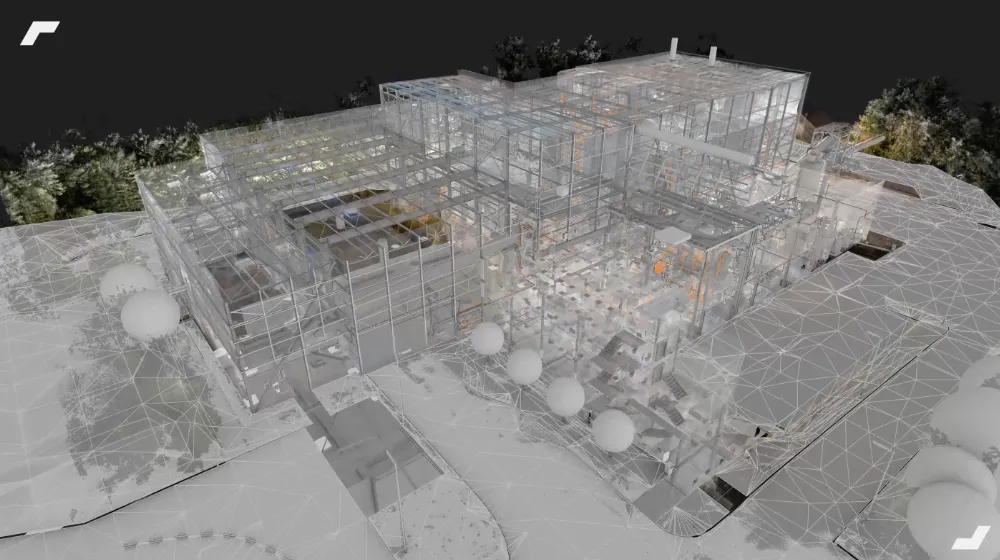
During industrial transformation phases, BIM models—derived from 3D laser scanning—act as a simulation environment. This allows teams to test new production line layouts, analyze material flow, and identify clash detections or spatial conflicts before any physical work begins.
By relying on reliable “as is” data, teams secure their decisions, reduce iterations and limit the risks of costly setbacks.
These use cases are the building blocks of a functional, widely adopted industrial BIM strategy. By delivering tangible benefits to field teams early on, you build the necessary buy-in to gradually expand the model in line with your site's evolving priorities.
Change Management: The Human Factor
The technical rollout of a BIM model is only the first step. Integrating BIM into daily operations requires a fundamental shift in workflows, making a robust Change Management Strategy essential for long-term success.
The key is a phased approach. Rather than attempting a disruptive overnight overhaul—which often triggers internal resistance—we focus on building progressive and continuous momentum.
Critical Success Factors:
- Early-Stage Commitment: End-users (Maintenance, Infrastructure, Security) must be involved starting at the audit phase. This ensures that BIM use cases reflect operational realities rather than purely “top-down” mandates.
- Targeted Training: We move away from generic tutorials. Instead, training is customized to specific service-line needs, exactly how BIM saves individual team members time and effort.
- Active Leadership Support: Management must do more than just approve the budget; they must actively champion the project, recognizing and rewarding teams that adopt these new standards.
By gradually integrating BIM into existing projects and by measuring the positive impact, the manufacturer is transforming BIM from a simple technological project into a new strategic tool, widely adopted by all site employees.
- Early involvement : End users must be involved right from the audit to avoid a “top-down” decision.
- Targeted training : It should not be generic but focused on saving personal time for each job.
- Management Support : Management must value the efforts of teams adopting these new practices.
This creates an evolving ecosystem that adapts to operational demands. Every data point and action strengthens our existing foundation, fostering a "virtuous cycle" between corporate strategy, digital tools, and field operations.
Beyond just BIM, we are building an integrated industrial approach—one defined by agility, comprehensive documentation, and a commitment to sustainable innovation and performance.
Let's study your project together
Contact us, we will study your project to provide you with an estimate as soon as possible
Contact us



To make sure you don't miss out on our news, subscribe to our newsletter now!
Receive quarterly updates directly in your inbox to stay informed about the latest news and events at My Digital Buildings.


